
“Outside the Big 4”—How MLS Aims to Become the Next Growth Hub in Sports Industry
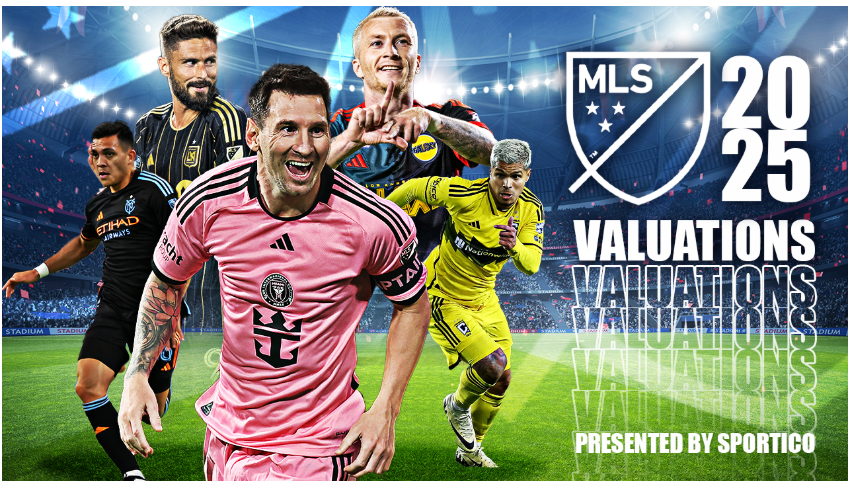
In the U.S., the term “Big 4” (MLB, NBA, NFL, NHL) still holds strong, but Major League Soccer (MLS) remains just outside of that category. However, various metrics now point to MLS emerging as the “next big thing” in sports. The years 2025 and 2026 will be a significant period for the league, thanks to the 2025 Club World Cup (hosted in the U.S.) and the 2026 North American World Cup. These events will provide MLS with a golden opportunity to expand its marketing models and revenue structures.
Media: The Benefits of Apple’s Single Distribution Deal and Transparency Challenges
Since 2023, MLS has signed a 10-year, $2.5 billion deal with Apple for global streaming rights (MLS Season Pass). This deal eliminates regional blackouts and provides global access to every match— a first for a North American major league.
However, measuring the success of this deal is difficult. Although MLS commissioner Don Garber revealed that the average unique viewers per game increased by 50% year-over-year in 2025, the definition of “unique viewers” remains unclear, leading to criticism. This lack of transparency contrasts with traditional TV ratings, where clear figures are easier to track.
Impact on Audience and Revenue: MLS is Already Big-League Ready
In 2024, MLS set a new record for attendance, with an average of 23,234 per match and a total of 11.45 million spectators across the season. Large stadiums (with capacities of 50,000–70,000+) are becoming more common, further establishing the league’s top-tier status.
The 2025 season will see the addition of San Diego FC, bringing the total number of MLS clubs to 30. This expansion will allow MLS to capture even more soccer demand in the Southern California region.
Sponsorships and Partnerships: Building on the League’s Expanding Reach
MLS’s long-term partnership with Adidas (worth $830 million for six years) strengthens both the consistency and marketability of its products. Team-specific sponsorships also grew by 13%, reaching $665 million in 2024.
Moreover, the joint MLS-Liga MX Leagues Cup, launched in 2023, has helped increase sponsorship and ticket demand, making the summer months an exciting and profitable period for the league. In 2025, the event will feature 62 games, increasing exposure to both American and Mexican fans.
Club Values and Investment Story: The Appeal of Scarcity and Demand
In 2025, LAFC’s value was estimated at $1.25 billion, and Inter Miami’s at $1.2 billion, highlighting the increasing value of MLS franchises. As the demand for MLS teams grows, the rarity of these franchises (due to the league’s closed structure and limited expansion) adds value. Additionally, the growth of stadiums and real estate developments, such as Inter Miami’s Freedom Park (scheduled for 2026), contribute to the league’s financial robustness.
Why MLS Still Isn’t ‘Big 4’: The Gap in Revenue and Media Power
Despite its growing popularity, MLS still lags behind the Big 4 in total league revenue and domestic TV viewership. To close the gap, MLS needs to leverage the upcoming mega-events in 2025 and 2026.
2025-2026 Mega Events: A Turning Point
- 2025 FIFA Club World Cup: This event will introduce North American fans to top European and South American clubs, while also showcasing MLS’s operational and partnership capabilities.
- 2026 FIFA World Cup: The World Cup will create a significant economic impact in cities like San Francisco, Houston, and New York, further boosting MLS’s brand visibility.
These events will lead to an increase in youth participation, new fans, and an expansion of global soccer portfolios, ultimately benefiting MLS clubs and the league as a whole.
Marketing and Growth: Six Key Points
- Enhance content bundling through the Apple ecosystem to increase subscriber retention.
- Focus on premium in-person experiences and price segmentation.
- Expand sponsorship portfolios to tap into the Latino market and expand into new categories.
- Maintain high-value league partnerships, including with Adidas.
- Expand stadium capacities to increase matchday revenue and overall asset value.
- Rebrand valuation metrics to reflect the league’s increasing worth.
2025-2027 Forecast
- Revenue: Team sponsorships will continue to grow, especially following the World Cup and Leagues Cup.
- Media: Subscription numbers for MLS Season Pass will peak twice— before and after the World Cup.
- Club Value: The value of top-tier teams will likely surpass $1.5 billion, driven by increased sponsorships and global fan engagement.
- Attendance: Average attendance will remain strong, with a potential surge in 2026 as World Cup-related matches draw more fans.
- League Positioning: While the “Big 4” framework will remain, the league will solidify its place as the de facto “Big 5.”
Conclusion: MLS’s Evolution into a Global Sports Business
MLS is moving away from a focus solely on TV ratings and instead evolving into a robust North American sports business, blending content, fan engagement, and real estate. The 2025 Club World Cup and 2026 World Cup will serve as catalysts for this transformation. Now, the league’s challenge is clear: expand the reach and visibility of its already appealing content.
Media Revenue Impact from the Apple Deal
- Guaranteed Step Up: The Apple deal guarantees a minimum of $250 million annually, a significant increase from the previous model with ESPN, FOX, and Univision.
- Realizing Incremental Growth: Despite the increased production costs, the deal is expected to yield an additional $75 million per year for the league, with each club benefiting from an estimated $1 million annually.
Risk Hedging: Avoiding the RSN Crisis
MLS’s shift to a single global streaming deal has helped it avoid the pitfalls of the regional sports network (RSN) crisis, which has affected other major U.S. leagues.
Salary Structure and Increased Player Spending
The 2023-24 collective bargaining agreement ensures that 12.5% of the increased media revenue will be allocated to player spending. By 2025, this percentage will rise to 25%, fostering a positive feedback loop of revenue growth and increased investment in the league’s competitive strength.
Conclusion: Financial Summary
- Revenue Growth: The guaranteed amount significantly exceeds previous years, leading to substantial incremental growth.
- Stability: The move away from regional sports networks ensures a more predictable cash flow.
- Global Expansion: The success of Messi’s arrival, coupled with the World Cup momentum, positions MLS for global growth and increased fan engagement.
Black & Gold, Embracing Son Heung-min—The Meaning Behind LAFC’s ‘LA-Style Big Deal’
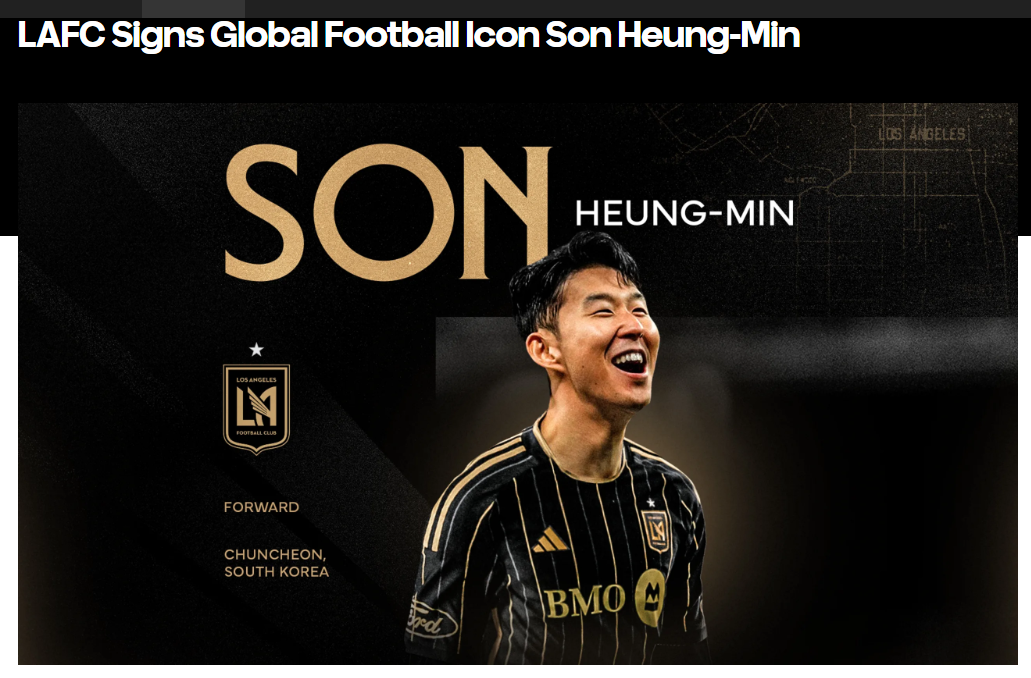
Los Angeles FC (LAFC) has signed Son Heung-min. The club acquired him as a Designated Player (DP) from Tottenham, with a contract running through 2027 (with options for 2028 and 2029). This deal, reportedly valued at over $26 million, marks the highest transfer fee in MLS history.
From Asian Icon to LA Icon
Tottenham confirmed Son Heung-min’s move to LAFC with an official announcement. This marked the end of a legendary 10-year, 454-game, 173-goal career at Spurs. ESPN and MLSSoccer both reported that this transfer broke the league’s record for the highest transfer fee. Son Heung-min, now a marquee player through the DP slot, will not face salary cap restrictions and is set to become one of the league’s top earners.
Tactics and Competitive Edge: LAFC’s Finishing Puzzle
Under head coach Steve Cherundolo, LAFC has focused on quick transitions and exploiting half-space. Son, known for his ability to start wide and cut inside, utilizing both his left and right foot, will add depth to the attack. Even when opposing teams drop deeper in defense, Son’s individual dribbling skills will allow LAFC to create numerical advantages. (Cherundolo is set to return to Germany after the season, but for now, Son will play within his system.)
The timing of Son’s debut is likely to be on an away match, with a possible home debut at BMO Stadium on August 31, depending on his transfer process and schedule.
LAFC Brand: ‘Shoulder to Shoulder’ and the Culture Created by 3252
LAFC, based at the soccer-specific BMO Stadium (formerly the Bank of California Stadium), introduced North America’s first safe-standing rail seating in the north end. The 3,252-seat supporter section, ‘The 3252,’ creates an atmosphere of constant energy with drums, chants, and tifo displays. The club and its supporters share the motto “Shoulder to Shoulder.” This culture embodies the ‘Black & Gold’ identity.
The LA Derby (El Tráfico), featuring matches between LAFC and LA Galaxy, is one of MLS’s most anticipated fixtures. With Son Heung-min’s arrival, the global appeal of the derby is set to reach new heights.
History and Achievements: From Newcomer to Instant Contender
Since its founding, LAFC has quickly amassed a trophy collection, including the MLS Cup (2022), Supporters’ Shield (2019, 2022), and the U.S. Open Cup (2024). The club’s home ground was renamed BMO Stadium in 2023.
City and Business Impact: How LA Absorbs the ‘Son Effect’
For the large Korean community in LA, Son Heung-min’s brand is about more than just his on-field performance. Demand for tickets, both home and away, will surge, as will subscriptions for Apple’s MLS Season Pass in both Korea and the U.S. Merchandising, especially sales of the number 7 jersey, is also expected to increase significantly. The record-breaking transfer fee serves as a powerful symbol, reinforcing LAFC’s position in the global market. (Son himself said in his first interview, “I came to LA to win.”)
Anticipating the ‘First Moment’ at BMO Stadium
BMO Stadium, located in the heart of LA near USC, maximizes the “urban soccer experience.” The stadium’s compact 22,000-seat configuration and the pressure from The 3252 supporters will make Son Heung-min’s home debut a highly anticipated event. His first goal and celebration will immediately become iconic moments in LA’s culture and MLS news.
Tactically, Son will be a key solution provider for LAFC, while from a business perspective, his presence is a symbolic milestone. In the multicultural city of LA, his addition represents the next chapter in the “Black & Gold” identity, which now includes another LA icon.

 VIKING BARCA