
When a Nation Skis Together, It Wins Together
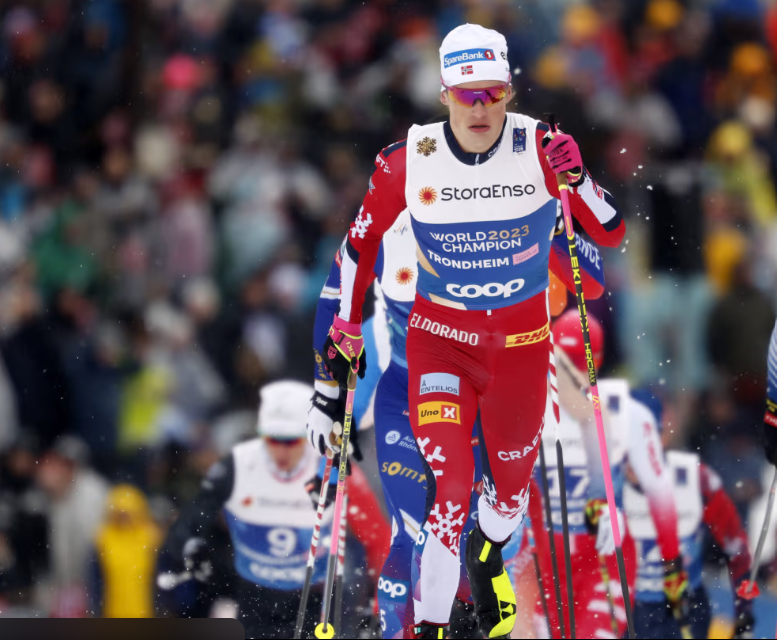
Norway’s Winter Olympic Dominance and Klæbo’s Historic Six-Gold Masterpiece
MILAN–CORTINA 2026 — Norway has done it again.
With 18 gold medals, 11 silver, and 11 bronze — 40 medals in total, Norway topped the medal table and set a new benchmark for Winter Olympic excellence. More than just numbers, the result reaffirmed Norway’s status as the most structurally dominant nation in winter sport history.
At the heart of this triumph stood one man:
Johannes Høsflot Klæbo.
Klæbo captured six gold medals in a single Games, the most ever won by an athlete at one Winter Olympics. His career total now stands at 11 Olympic gold medals, cementing his legacy as one of the greatest winter athletes of all time.
A Medal Machine Built on Nordic Strength
Nearly 70 percent of Norway’s medals came from Nordic disciplines — cross-country skiing, biathlon, Nordic combined, and ski jumping.
Norway’s 2026 Medal Breakdown
| Sport | Gold | Silver | Bronze | Total |
|---|---|---|---|---|
| Cross-Country Skiing | 7 | 1 | 4 | 12 |
| Biathlon | 3 | 4 | 3 | 10 |
| Nordic Combined | 3 | 0 | 0 | 3 |
| Ski Jumping | 2 | 1 | 1 | 4 |
| Speed Skating | 1 | 2 | 2 | 5 |
| Freestyle Skiing | 2 | 0 | 0 | 2 |
| Alpine Skiing | 0 | 1 | 1 | 2 |
| Total | 18 | 11 | 11 | 40 |
Norway did not merely win — it dominated its cultural core sports.
Klæbo’s Six-Gold Sweep
Klæbo’s golden campaign included victories in:
- 20km Skiathlon
- 10km Freestyle
- Sprint
- Team Sprint
- 4×7.5km Relay
- 50km Classic
From explosive sprints to grueling long-distance endurance, he proved unmatched across formats.
But what separates Klæbo from the rest?
The Science Behind Klæbo’s Superiority
1️⃣ Biomechanics of Power Conversion
In cross-country skiing, speed is not simply about strength — it is about force efficiency.
Impulse = Force × Time
Klæbo generates exceptionally high impulse in a short time window. His pole plant is compact yet explosive, and his core stability ensures minimal energy leakage. The result: maximum propulsion with minimal waste.
2️⃣ Weight Transfer Precision
Velocity in skiing depends on how effectively force is transferred into forward motion.
Klæbo’s technique shows:
- Near-perfect weight shift timing
- Minimal lateral drift
- Optimal ski-edge angle in freestyle
- Superior grip efficiency in classic
He transforms friction into propulsion.
3️⃣ Energy Management and Tactical Patience
Perhaps his greatest weapon is restraint.
In distance events like the 50km classic, Klæbo conserves energy by:
- Drafting strategically
- Maintaining rhythmic oxygen efficiency
- Avoiding early anaerobic spikes
Then, in the final kilometer, he changes gears.
He is not merely the strongest skier —
he is the most efficient skier.
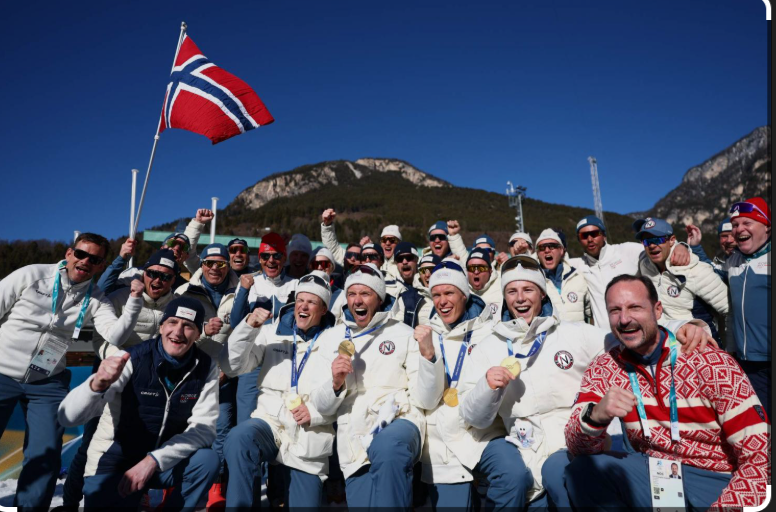
The Secret Behind Norway’s Success: “Joy of Sport”
Norway’s dominance is not built on centralized elite pressure but on a national philosophy known as “Idrettsglede” — the joy of sport.
Key pillars of the system:
✔ Children First
- Limited early competition pressure
- Multi-sport participation encouraged
- Long-term development focus
✔ Club-Based Structure
- Local sports clubs form the backbone
- Even Olympians maintain club affiliation
✔ Mass Participation
- Skiing is daily life
- Outdoor activity is cultural identity
The result?
A wide base of physically literate children.
A high VO₂ max population average.
A deep talent pool.
Elite success becomes an outcome, not an objective.
A Model the World Watches
Norway’s 2026 triumph was not accidental. It was systemic.
When a country builds joy into its sports culture, it builds endurance.
When children grow up playing in snow, they grow into champions.
When development is patient, excellence becomes sustainable.
In Milan, Norway didn’t just win medals.
It proved that the strongest sports systems are those rooted in participation, community, and long-term vision.
And at the summit stood Klæbo —
a product of a nation that skis not for glory,
but because it loves to.

 VIKING BARCA