
A Comprehensive Sport of Speed, Endurance, and Agility
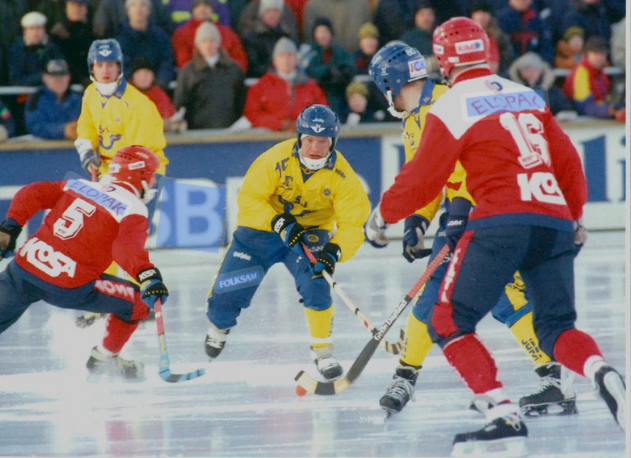
Bandy, a unique winter team sport that originated in Northern Europe and gained popularity in Norway, Sweden, Finland, and other regions, is a fascinating combination of ‘ice hockey’ and ‘soccer.’ However, bandy is not just a simple ice sport. It is being highlighted as the next-generation winter sport, based on high-intensity full-body exercises, advanced teamwork, and scientifically proven physical benefits.
A Concentrated Form of High-Intensity Aerobic Exercise
Bandy is played on an ice rink the size of a soccer field, with 11 players using sticks to score a ball into the goal, and the game lasts for 90 minutes without rest. Exercise physiology studies show that bandy players maintain an average heart rate of 160–180 bpm and a maximum oxygen uptake (VO₂max) of over 60ml/kg/min, which is comparable to elite football players or cross-country skiers.
“Bandy is like performing high-intensity interval training in real-time. Short bursts of sprinting, sudden stops, direction changes, and stick manipulation in tight spaces require both cardiovascular endurance and anaerobic capacity.”
— Dr. Magnus Lindholm, Swedish Sports Science Institute
Exceptional for Improving Agility and Core Strength
On the ice, bandy players change direction at high speeds, dodge opponents, and use their sticks, all of which demand complex motor coordination and high agility. In addition, ice skating techniques maximize the coordination of the player’s hip, core, and lower body muscles. The continuous skating and pushing movements strengthen the gluteus, hamstrings, and calf muscles.
From a biomechanics perspective, the critical components of fast deceleration-acceleration cycles, rotational control, and friction management on the ice enhance the player’s neuromuscular response speed and balance.
Improving Cognitive Ability through Team Sports
Bandy is a team sport that relies on strategic positioning, split-second decision-making, passing coordination with teammates, and tactical deployment. This helps improve the players’ field awareness, spatial perception, and working memory. The ability to make quick decisions in rapidly changing game situations shortens the players’ cognitive-motor reaction time and is closely linked to enhanced brain neuroplasticity.
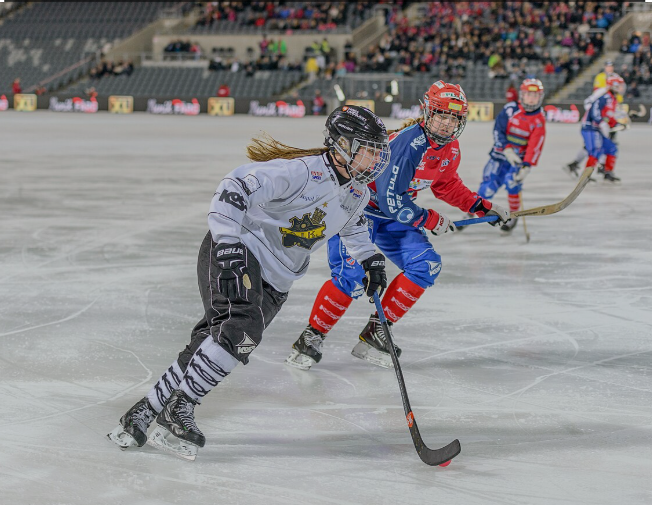
Scientifically Proven Benefits of Bandy
- Aerobic Endurance: Improved cardiovascular function through prolonged skating and continuous movement.
- Anaerobic Capacity: Increased lactate threshold due to repeated sprints and sudden acceleration-deceleration.
- Agility and Reaction Speed: Enhanced first-touch ability and quick direction changes.
- Strength and Muscular Endurance: Strengthening of lower body and core, with sustained muscle activation.
- Teamwork and Cognitive Ability: Improved spatial awareness, strategic decision-making, and neurocognitive performance.
The Athletic Value of ‘Football on Ice’
Bandy is more than just a winter sport; it is a discipline that combines scientifically proven full-body exercise benefits with team-based cognitive training. Unlike traditional land-based sports, it allows for simultaneous improvements in endurance, agility, and cognitive function, making it an ideal cross-training form for athletes ranging from youth players to elite professionals.
“Bandy is a war on ice. But this war trains our bodies and brains in the most scientific way possible.”
— Emil Sander, Norwegian National Bandy Team
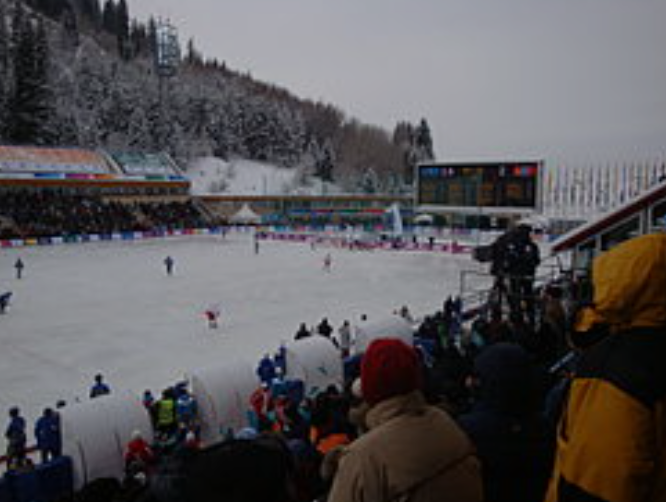
Bandy vs Soccer vs Ice Hockey
— A Dynamic Triangular Comparison of Winter Sports
Although bandy, where 11 players pass the ball like soccer on the ice, may be unfamiliar to many, it combines soccer’s strategy, ice hockey’s speed, and the highest level of physical fitness demands from exercise physiology. This article scientifically analyzes the unique physical characteristics and advantages of each sport, comparing bandy to soccer and ice hockey.
| Category | Bandy | Soccer | Ice Hockey |
|---|---|---|---|
| Field Size | ~100 x 60m (ice rink) | ~105 x 68m (grass) | ~61 x 26m (indoor ice rink) |
| Game Time | 2 x 45 minutes (half-time) | 2 x 45 minutes | 3 x 20 minutes |
| Activity Intensity | High-intensity intermittent aerobic | Sustained aerobic + anaerobic | High-density intermittent anaerobic |
| Average Heart Rate | 160-180 bpm | 150-170 bpm | 170-190 bpm |
Analysis: Bandy requires endurance-based fitness similar to soccer with a field size and game duration, but the fast-paced skating and direction changes on ice make it require explosive power and reaction speed akin to ice hockey.
| Skills, Agility, Coordination Comparison | Bandy | Soccer | Ice Hockey |
|---|---|---|---|
| Equipment Used | Stick + Ball/Bandy | Foot + Ball/Soccer | Stick + Puck/Ice Hockey |
| Agility & Reaction Speed | High-speed direction changes, ice sliding | Foot control, turning motions | Body checks, fast spins |
| Coordination | Hand-eye-foot-ice coordination | Foot-eye coordination | Hand-eye-body coordination + collision handling |
Analysis: Bandy trains hand-foot coordination, eye-space perception, and balance on the ice simultaneously. It combines the dribbling skills of soccer with the rapid rhythm of ice hockey.
| Tactical & Cognitive Enhancement | Bandy | Soccer | Ice Hockey |
|---|---|---|---|
| Tactical Composition | Soccer-like positional base + hockey-style pressure | Formation-based wide space utilization | Quick transitions, line change systems |
| Cognitive Enhancement | Maximizes field awareness, situation assessment, spatial perception | Broad field vision, long-term strategic thinking | Rapid decision-making, short cognitive-action loops |
Analysis: In bandy, players must quickly track the ball on the ice, maintain awareness of the wide space, and keep positional relationships with teammates. This requires simultaneous development of cognitive processing speed, spatial awareness, and tactical adaptation.
Comprehensive Comparison and Applicability
| Aspect | Bandy | Soccer | Ice Hockey |
|---|---|---|---|
| Aerobic Endurance | Similar to soccer (long continuous movement) | Long-term continuous movement | Short bursts of effort, minimal continuous movement |
| Anaerobic Power | Similar to hockey (sprint repetitions) | Short bursts of anaerobic power | Explosive anaerobic efforts |
| Agility | Wider space, quicker direction changes than soccer | Rapid turns, controlled with feet | Fast maneuvers with body |
| Cognitive Ability | Combines both soccer and hockey advantages | Requires broad vision, strategic thinking | Fast decisions, short cognitive-action loops |
| Training Effect | A multi-faceted workout improving various physical capabilities | Focuses on aerobic endurance | Explosive strength and reflexes training |
Bandy’s Position: Bandy is more than just a regional sport; it has the potential to evolve into a comprehensive full-body sport on ice. It is an ideal training method for improving soccer players’ fitness, enhancing space perception in hockey players, and is an excellent cross-training option for developing youth athletes’ overall physical abilities.
As more sports scientists study bandy as a model for multi-sport ability enhancement, the future of bandy as a fast, intelligent, and scientifically effective winter sport is clear.
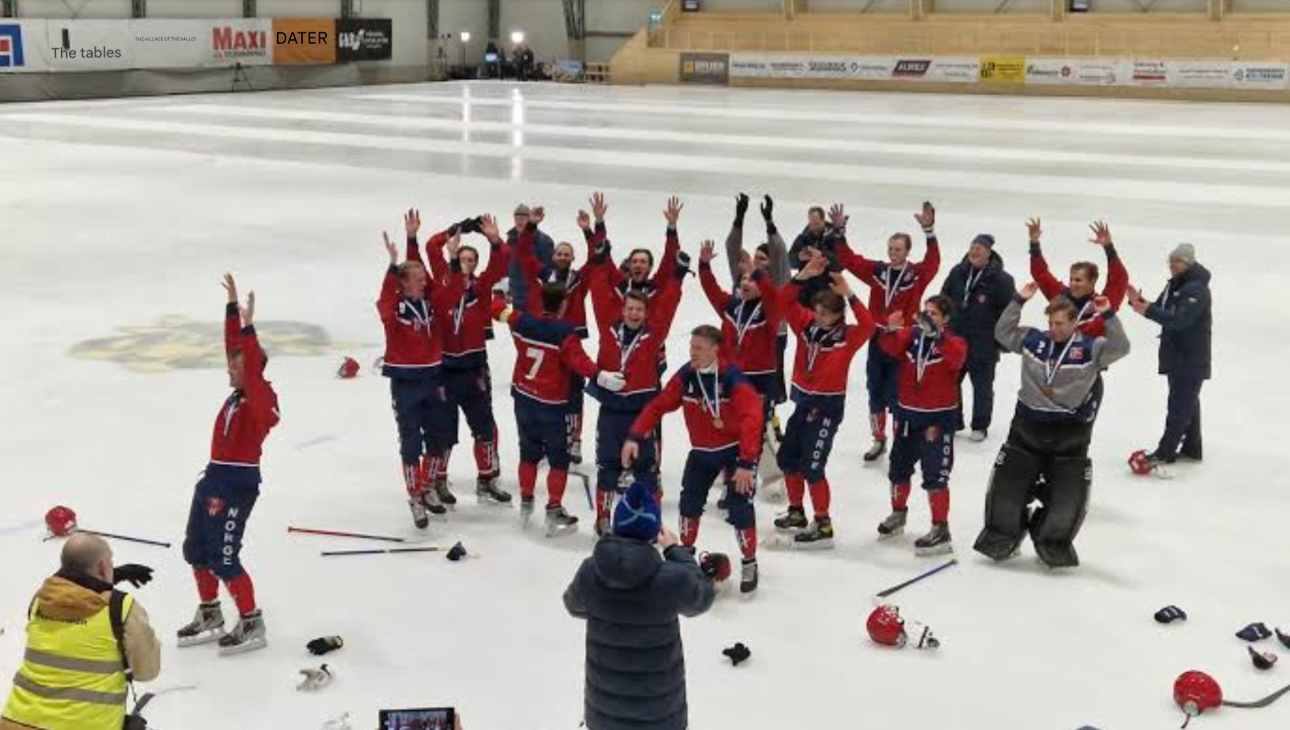

 VIKING BARCA