
The Symbolic Movement of Brazilian Football: Ginga
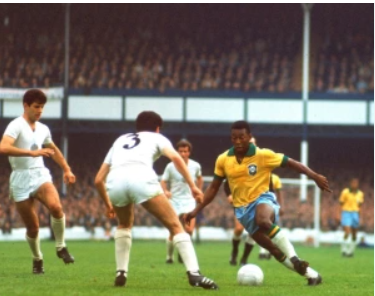
1. Etymology and Cultural Background of Ginga
- Etymology
“Ginga” comes from the Portuguese word meaning “to sway” or “to ripple,” and it originates from Brazilian Afro-Brazilian culture and the martial art ‘Capoeira’.
In Capoeira, “ginga” refers to the basic rhythmic movement, where the body sways and the step is flexible, used to evade an opponent’s attacks and create counterattacks. - Cultural Philosophy
Brazilian football’s ginga is not just a dribbling technique but an expression of rhythm, creativity, and playful spirit (Joga Bonito). It reflects the Brazilian philosophy of football, which views the sport as an extension of life, emphasizing improvisation, emotion, and self-expression.
2. Features of Ginga (Technical/Movement Perspective)
- Rhythm of Movement
Rhythmic left-right swaying movements with irregular beats. - Lower Body Engagement
The use of the hips, knees, and ankles to blur the opponent’s center of balance. - Torso Rotation
Utilizing the torso to change direction and create feints. - Improvisation
Reacting creatively to the situation, with no predetermined patterns. - Deception (Fake)
Small movements of the shoulders, hips, and knees confuse the opponent’s judgment.
3. Biomechanics Perspective on Ginga
- (1) Center of Mass (CoM) and Balance
Ginga involves continually shifting the Center of Mass (CoM) from side to side, intentionally creating imbalance.
Opponents are tricked due to the unpredictable shifts in center of mass, which reduces their reaction speed.
The player, however, maintains balance by skillfully adjusting the Center of Pressure (CoP) in their feet.
➡️ Coordinating the pelvis, knees, and ankles is critical for maintaining balance. - (2) Joint Mobility and Elasticity
Flexibility in the hips and spine is crucial for ginga movements.
The smooth, flowing motion is similar to the stretch-shortening cycle (SSC), where elastic energy is stored and released.
➡️ This elasticity enables explosive directional changes (dribbles, turns). - (3) Ground Reaction Force (GRF) Utilization
By utilizing the GRF from the ground, the player can make quick movements or deceptive maneuvers.
Short, sharp foot movements create strong horizontal GRFs, resulting in agility.
➡️ Ginga is optimized for multi-directional movement, unlike linear movements. - (4) Motion Pattern Variability and Improvisation
Ginga is characterized by dynamic movements connected at various angles, speeds, and rhythms.
The brain’s motor planning and sensory integration enable real-time responses to visual, spatial, and auditory cues.
➡️ This serves as an ideal model for training adaptability and flexibility of the nervous system.
4. Example of Brazilian Players Using Ginga
- Ronaldinho: Rhythmic dribbling with musical rhythm, using flexible fakes with the hips and shoulders.
- Neymar Jr.: Sudden direction changes and unpredictable feints.
- Garrincha: Hip swaying, with rapid stops and starts, creating rhythm.
5. Application in Sports Training
- Movement Variability Training
- Rhythm-based Agility Training
- Capoeira, Dance, and Music-linked Training → Enhances creativity and neural response.
- Neuromuscular Control Enhancement
Ginga is not just a personal skill; it is a unique movement system that integrates biomechanics, rhythm, and cultural emotion.
These movements are based on shifting centers of gravity, flexibility, and agility, maximizing brain-body coordination and improvisational responses.
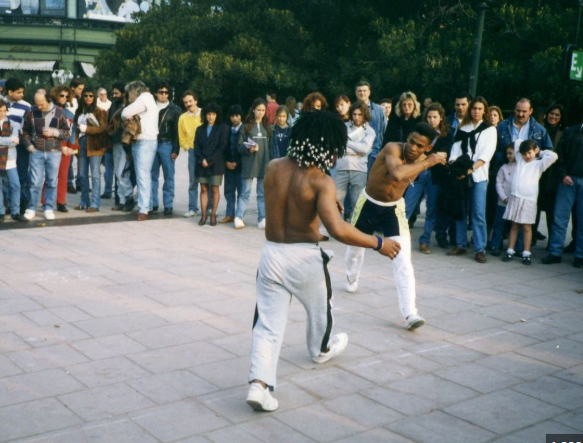
Capoeira and Samba: Brazil’s Traditional Cultural Influences on Football
1. Brazilian Capoeira
- Overview
Originating from African slaves’ resistance movements, Capoeira is a traditional Brazilian martial art combining dance, music, and combat elements.
The movements are rhythmic and involve continuous, curved movements such as dodges, kicks, and spins. - Scientific Analysis
- Improves Neuromuscular Coordination: Repetitive directional changes, balance maintenance, jumps, and kicks develop overall neuromuscular coordination.
- Increases Flexibility and Agility: Enhances the range of motion in the hips, spine, and shoulders, improving movement speed and accuracy.
- Balance and Center of Mass Training: Ability to control shifts in weight during low stances and swinging motions.
- Core Muscle Strengthening: Rotational movements using hands, feet, and back strengthen core muscles.
- Enhanced Cognitive-Response Speed: Reacting to opponents’ movements and executing quick counters boosts reflexes and real-time decision-making.
- Improved Cardiovascular Endurance: Continuous motions mix aerobic and anaerobic activity, improving VO₂ max and heart function.
- Sports Applications
Effective for dribbling, body fights, weight shifting, and opponent response training, especially in football.
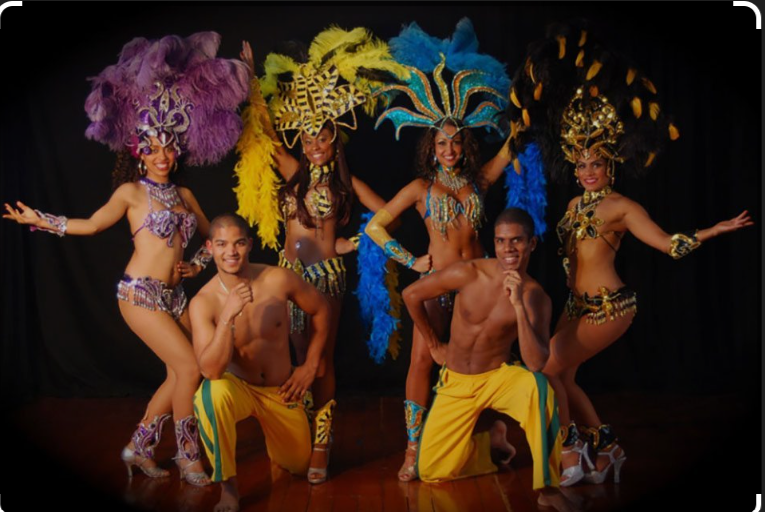
2. Samba Dance
- Overview
Rooted in African music and rhythms, Samba is a traditional Brazilian dance featuring rapid, rhythmic footwork and hip movements. - Scientific Analysis
- Rhythm-based Movement Control: Requires accurate foot placement and weight shifting in time with fast music, improving brain-muscle synchronization.
- Improved Lower Limb Endurance: Repetitive foot movements enhance endurance in the calves, thighs, and glutes.
- Cardiovascular Health: High-intensity interval training boosts heart rate, blood circulation, and blood pressure control.
- Balance Enhancement: Precise control of small shifts in balance at high tempos improves vestibular training.
- Emotional Expression and Psychological Well-being: Samba releases stress and increases serotonin, promoting mental health.
- Integration of Music and Movement: Enhances sensory-motor integration by combining movement with auditory feedback.
- Sports Applications
Effective for footwork, agility, and sensory-motor integration training in figure skating, gymnastics, football, and ballet.
3. Common Features and Sports Training Value of Both Movements
- Rhythmic Full-body Movement: Enhances timing, beat perception, and organic motion.
- Utilization of Hips and Spine Rotation: Key biomechanics in ginga, dribbling, evasion, and direction changes.
- Non-linear Movement Training: Improves agility by adapting to unpredictable paths and patterns.
- Enhances Creativity and Improvisation: Develops the ability to generate spontaneous, non-formalized movements.
- Holistic Body and Mind Training: Combines physical and emotional aspects with spatial awareness, enhancing brain and body integration.
4. Sports Science Interpretation of Capoeira and Samba
- Capoeira is centered on dynamic balance, reaction, flexibility, and muscular endurance, suited for real-world application.
- Samba enhances rhythm, lower limb endurance, and sensory-motor integration.
Both systems have been key in developing the creativity, elasticity, and rhythmic dribbling seen in Brazilian football.
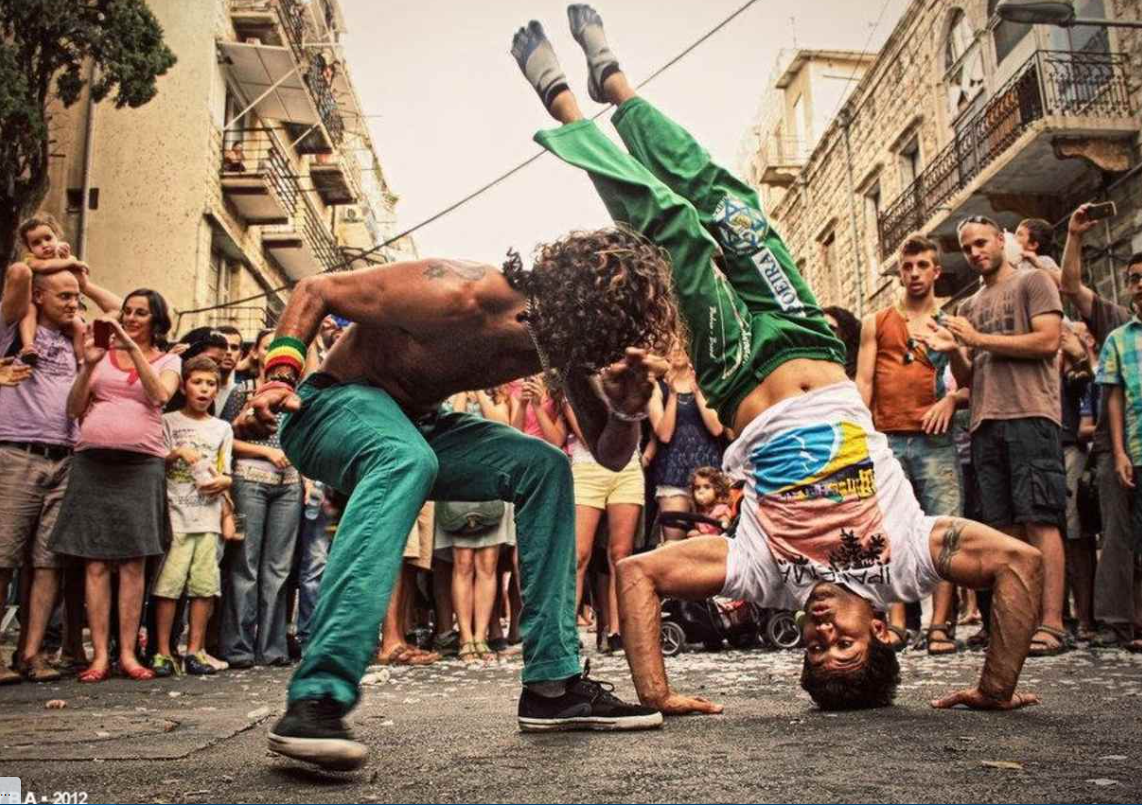
Brazilian Football: Creativity and Biomechanics
1. Creativity and Biomechanics: General Structure
- Unpredictability: Non-linear movement patterns, generating diverse and irregular motions.
- Movement Variability: Solving the same problem through different methods, enhancing body part coordination.
- Improvisation: Real-time environmental awareness improves neural and muscular response speed.
- Physical Expressiveness: Increasing joint mobility, enhancing sensory-motor feedback loops.
- Psychological Freedom: Reduced tension increases muscle elasticity efficiency.
2. Development Factors of Brazilian Individual Skills and Biomechanical Analysis
- Flexible Center Movement in Space: Brazilian players lower or tilt their bodies and make sudden shifts to fool defenders.
➡️ Core skill: CoM (Center of Mass) adjustment and ankle-knee-hip triple-joint coordination.- Pelvic and Spine Rotation: Rotating the pelvis and torso generates deceptive movements.
➡️ Core skill: Managing moment of inertia to perform feints.
3. Summary: Brazilian Skills Development vs. Biomechanical Advantages
- Rhythmic Movement: Coordination and balance through ankle-knee-hip cooperation.
- Curved Dribbling: Utilizing ground reaction forces for multi-directional movement.
- Creative Feints: Enhancing neural circuits between motor planning and execution.
- Full Use of the Foot: Training motor units for precise control during high-speed movements.
- Improvised Responses: Improving reflexes and cognitive processing speeds.
Brazilian football techniques are not just about talent, but also the combination of creativity, emotion, rhythm, and biomechanics. This intricate blend allows players to move with freedom, adaptability, and skill, leading to unique and unpredictable performances on the field.

 VIKING BARCA